

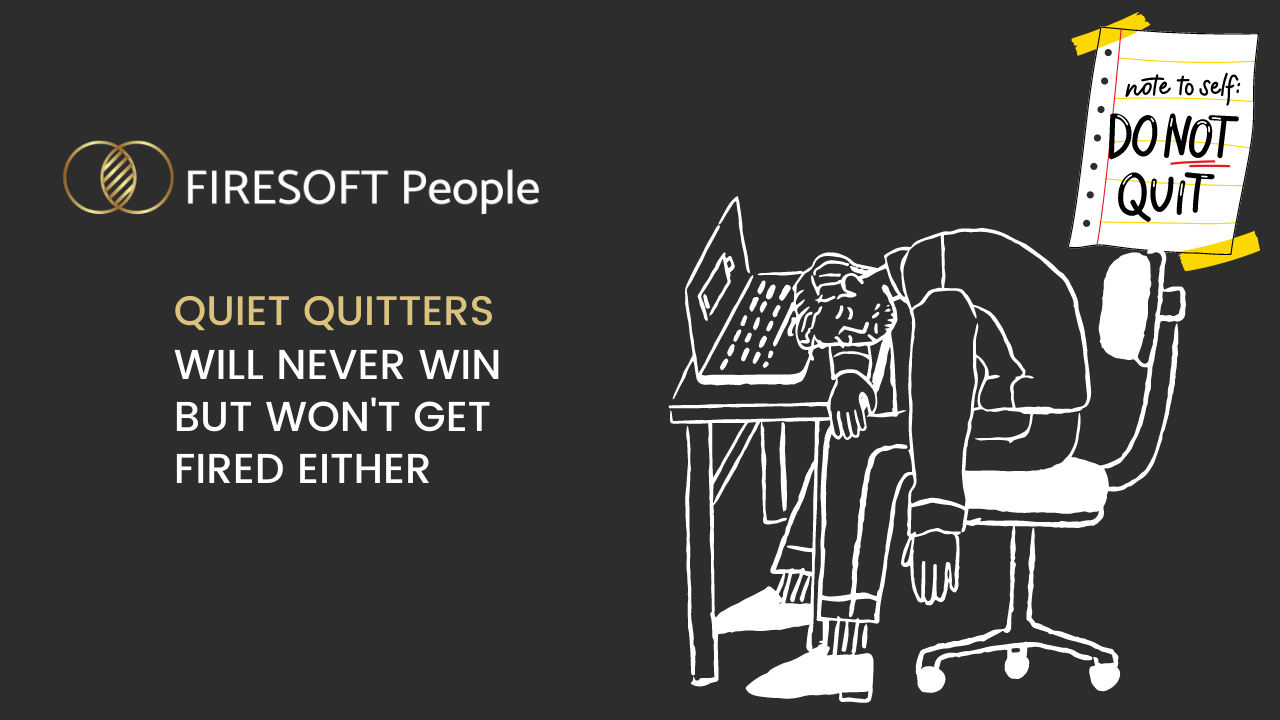
Quiet Quitters Will Never Win but Won't Get Fired Either
Default Author • September 29, 2022

The concept of Quiet Quitting has taken the world by storm since this viral TikTok video was released. This new buzzword is trending on social media, and with more than 30 million views for #quietquitting on TikTok, there's a good reason that people are talking about it. Quiet quitting is defined as not exerting extra effort at work while not getting into any trouble that could potentially have someone fired. It's become a catalyst for people to prioritise mental health and overall well-being in the workplace. The Great Resignation started this movement with people realising their priorities in life. Now more than ever, mental health is propelled to the forefront and is no longer a taboo topic. More people want to talk about it and want to be heard.


For the longest time, the hustle culture of going above and beyond company expectations, answering work calls, messages, and emails after hours, and rendering overtime have been the mindset to get that recognition you feel you deserve. This mindset has driven people to feel underappreciated, underpaid and burned out, causing them to take a step back and do the bare minimum. Effects of how you feel at work could be brought at home, too. If you find yourself feeling this way, it could be a sign of unhappiness. Quiet quitting may not be a sustainable answer to burnout. It's a quick fix without the risk of getting fired. While looking after one's well-being is essential, seeking help is equally important when you feel like you are pushed to the edge. There are ways to combat burnout without taking the backseat.


Seek Help

Co-workers or your manager won't know you're struggling if you won't say anything, and there's no one better to share your story than yourself. Talk to your manager and be open with how you're feeling about your current role. This conversation could go so many ways, such as seeking more training, showing interest in more tasks, working towards a promotion, asking for a raise, voicing out that you feel overworked, or simply wanting to be heard by your manager and getting their advice. You may even consider seeking professional help from a therapist. Many companies have invested in incorporating mental wellness into their employee benefits. Now might be the best time to make use of it.


Set Healthy Boundaries

Cultivating a healthy relationship with your work will keep you going even when circumstances get tough. You can do this by not ‘taking work home’ with you and managing your work hours efficiently. Getting your tasks done within work hours will give you a better sense of accomplishment. If you’re in a job where the workload is impossible to fit into your work hours, practice the art of prioritisation and accept that there is only so much you can do without causing too much stress on yourself.

Setting boundaries will also allow you time to venture into other things, such as a series you have been dying to watch, a class you've been looking into attending, a weekend with your family, or even earn extra money with a side hustle. Spending time on things you're passionate about can give your mind a break and a sense of accomplishment.


Change of Mindset

Often, we tie our identities to our jobs, and when we don't receive any recognition for our work, we end up disappointed. Work isn't the defining factor of who we are. It's only a part of the big picture we paint for ourselves. You may also want to reach out to a work friend or a trusted mentor to give you a different insight into your situation. Having a healthy support system with colleagues will not only help give you a sense of belonging, but it may even help manage stress levels.


Self-assessment

If you're miserable, it may be time to reevaluate your priorities and what you want from a job. It's better to leave than to stay in a place where you know you won't grow or feel fulfilled.


They say quitters will never win, but quitting isn't bad in certain circumstances. Quiet quitting, however, may not help solve the problem. It's important to remember that happiness is complex and fleeting. Achieving happiness in the workplace is a personal journey, not a final destination.

If you're looking for a change of pace, a different environment, or a new challenge, we might have the thing for you. Visit our live jobs here to help you start your journey.

Other suggested reads for you

By Shazamme System User March 16, 2026
Why Connection Matters More Than Ever Networking is a Leadership Skill Great leaders don’t just build strong teams. They build strong ecosystems. In today’s fast-changing professional landscape, leadership is no longer defined only by technical knowledge, authority, or organisational hierarchy. The most effective leaders understand that their influence extends far beyond their immediate team. Leadership today is about building meaningful professional networks that enable ideas, collaboration, and innovation to thrive. In other words, the leaders who succeed today are not necessarily those with the most information — but those who are most connected to the right people, perspectives, and insights. Networking has evolved. It is no longer transactional. It is relational, strategic, and essential to modern leadership. Rethinking Professional Networking From Contacts to Communities For many years, networking was often misunderstood as a purely transactional activity. People attended events to exchange business cards, connect briefly on LinkedIn, or pitch themselves to potential clients or employers. While these activities can still have value, they represent only a small part of what effective networking looks like today. Modern professional networking is about building long-term relationships and communities of trust. Effective leaders don’t simply collect contacts. They build professional ecosystems made up of: Colleagues and peers Mentors and advisors Industry leaders Emerging talent Professionals from adjacent industries These relationships allow leaders to stay connected to a wide range of ideas, trends, and perspectives. By expanding their network beyond their immediate organisation, leaders gain access to insights that might otherwise remain invisible. This broader perspective helps leaders: Stay informed about emerging industry trends Identify new opportunities earlier Adapt to technological or market changes faster Strengthen strategic decision-making In an increasingly complex business environment, diverse professional networks provide a significant competitive advantage. Why Networking Improves Leadership Effectiveness Strong professional networks are more than social connections. They are a leadership multiplier. When leaders actively build relationships across industries and disciplines, they gain access to valuable knowledge and perspectives that improve how they lead. 1. Leaders Gain Early Insight into Change Professionals across different industries experience change at different times. When leaders maintain strong connections with people outside their organisation, they often hear about new trends, technologies, and challenges before they become widely recognised. This early awareness allows leaders to anticipate shifts and respond proactively rather than reactively. 2. Diverse Networks Lead to Better Decisions Leadership decisions benefit from diverse perspectives. When leaders rely only on internal viewpoints, they risk reinforcing existing assumptions or overlooking alternative solutions. Engaging with professionals from different sectors, backgrounds, and experiences introduces new ways of thinking that can improve problem-solving and strategic planning. 3. Professional Networks Increase Leadership Resilience The modern business environment is unpredictable. Leaders frequently face complex challenges, economic uncertainty, technological disruption, and organisational change. A strong professional network provides access to support, guidance, and alternative perspectives when navigating difficult decisions. Leaders who cultivate meaningful connections are rarely facing challenges alone. 4. Networking Enables Leaders to Support Others One of the most powerful aspects of networking is the ability to open doors for others. The most respected leaders are not those who protect access or guard influence. They are those who actively support the growth of others by sharing knowledge, making introductions, and mentoring emerging professionals. True leadership influence does not come from authority. It comes from creating value for others. The Role of Generosity in Leadership Networking The most effective professional networks are built on trust, generosity, and shared learning. When leaders approach networking with a mindset of helping others rather than extracting value, relationships naturally strengthen over time. Generosity in professional networking can include: Sharing insights and industry knowledge Introducing people who could benefit from meeting each other Mentoring early-career professionals Offering advice or support without expecting immediate return This approach creates a network built on mutual respect and long-term trust. Over time, these relationships often generate opportunities that cannot be predicted or planned. A casual conversation may lead to a future collaboration. A former colleague may become a strategic partner. A mentee may grow into a future leader. Networks built through generosity often evolve into powerful ecosystems of collaboration and opportunity. A Simple Networking Habit for Leaders Building a strong professional network does not require constant events or large-scale outreach. Often, the most meaningful professional relationships grow from small, intentional conversations. A simple leadership habit can make a significant difference. Set aside one hour each month to reconnect with someone outside your immediate circle. This might be: A former colleague Someone working in another industry A mentor or advisor A professional contact you have not spoken to in a while Instead of focusing on selling, pitching, or promoting yourself, approach the conversation with curiosity. Ask questions such as: What changes are you seeing in your industry right now? What challenges are organisations currently facing? What new ideas or technologies are you exploring? Listening to these insights can expand your perspective and spark new ideas. Sometimes a single conversation can reshape your thinking, highlight a new opportunity, or reveal a trend you had not yet considered. This is where networking becomes more than a career tool. It becomes leadership development in action. The Future of Leadership is Connected The business environment is becoming increasingly global, digital, and interconnected. No leader can succeed in isolation. The leaders who thrive in this environment are those who understand how to connect people, ideas, and opportunities. They build networks that encourage collaboration, learning, and innovation. They recognise that leadership is not about standing at the centre of a hierarchy. It is about participating in a network of knowledge and trust. In the modern workplace, networking is no longer optional. It is a core leadership skill. And the leaders who invest in meaningful professional relationships today will be the ones best equipped to navigate the challenges and opportunities of tomorrow.
August 8, 2024
As work evolves, recruitment must adapt by investing in virtual solutions. Focus on three key points: First, ensure a positive candidate experience, as negative interactions can deter talent. Second, use AI to reduce bias and streamline hiring, with tools like Arya supporting equitable decision-making. Finally, update interview questions to assess technological proficiency and remote work readiness. By embracing virtual hiring solutions, businesses can thrive in the changing work landscape.
August 1, 2024
Mastering interviews isn't just about having the right answers—it's about how you present them. Avoid language that minimizes your abilities. Instead, share specific examples that showcase your skills and achievements. Speak with confidence to make a memorable impact.